The Nazarabad Mysore Mylari
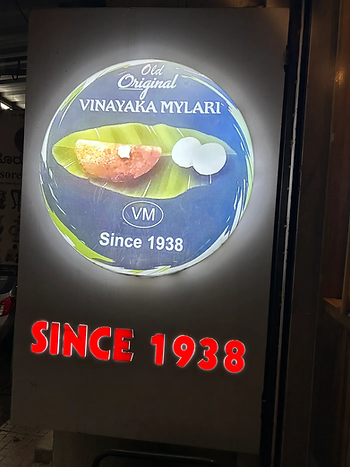
The man behind the counter, who stared at us for a moment, resembled Gregor Samsa (Kafka’s Metamorphosis) turned into a ‘monstrous vermin’. Stuck behind the kiosk, he was unable to move for fear of exposing the counter’s money drawers. So he stood there, reflecting on what to do. Much like what Gregor thought of his job as a salesman, being “plagued with…the always-changing, never-enduring human exchanges that don’t ever become intimate.” His pink full-sleeved shirt matched the red sofas, neatly arranged in a row. No waiter navigated you to a vacant seat, and one had to be smart to share a table with the seated, or else you had to wait eternally. As soon as you were seated and barely managed to exchange glances with the tablemates, a server came and placed a steel plate in front of you, covered with a neat and washed plantain leaf. And then there was a long pause and an eerie silence, not a murmur heard. All you can hear from behind is the creak of a narrow doorway and the aroma of a dish that can tingle your aromatic spirits. Out of the doorway emerges a waiter with his tray arranged with dosas and a dollop of butter, while the server behind him trails him with a couple of variants of chutney. All served at one stretch and in a rhythm, people start tearing into the fluffy white dosa, embellished with butter and distinct flavours of the chutney. Halfway through the dosa, as one gazes at the remainder on the plate, the waiter comes around to check if you would like another dosa. Confined to one dish on the menu list, there is no room for choice or decision-making. The uniformity with which the dosa is served, the style in which the waiter follows the pattern of serving, is typical of the Mysorean lifestyle, which is rather austere, passive and consistent. Voices are heard as soon as you make way for the next cohort of clients already queued up before the hotel.
My husband has been after me, persuading me to taste the famous Mysore Mylari Dosa, and that is exactly where I laboriously drove on one of the weekends, forcing myself to walk through the narrow lanes of Nazarabad Street, where the Vinayaka Mylari hotel is located. That was an experience indeed as I tasted the signature Mylari fluffy dosa with white butter and green and white chutney. Spongy and fluffy, the dosa melts in the mouth along with the butter, while the masala makes the dosa tastier. Mylari is a name for Shiva, and this family started the original Mylari dosa hotel in 1938. From then to the fourth generation that manages this small place, they have been following the same recipe, like the gods who never change.
A culinary identity indeed that has been preserved by the family, passing down the tastes as living heirlooms, connecting the present with the past, emotions, memories, and family history preserved through generations. The culinary legacy continues at the Old Vinayaka Mylari Hotel; indifferent to the space, the crowd, and the traffic around, the recipes are a ritual, and the sensory experience lingers long after…


Comments